
The final whistle blows. Players shake hands, families pack up folding chairs, and the car park empties. For most of sport's history, that was where the relationship paused until next week. It does not have to be.
The Spectator Model Is Reaching Its Limits
The Match-Day Relationship
For generations, being a fan meant being present. You stood on the sideline, sat in the stand or listened to the result later. The relationship between supporters and sport was built around a single moment: the match itself.
That model created deep loyalty, but it also created limits. If you could not be there, you missed it. If you lived in another city, you followed from a distance, if at all. And between fixtures, there was very little to connect you to the players and clubs you cared about.
In community, amateur and emerging sport, those limits are even sharper. Many competitions have never been broadcast. Many athletes have never had a way to be seen beyond the people who happened to attend. Many clubs know their supporters by face but have no lasting way to stay in touch with them.
Audiences on Borrowed Platforms
Digital platforms changed part of this picture. Clubs post fixtures and results on social media. Athletes share training clips and match moments. Supporters comment, share and follow.
But most of that activity happens on platforms designed for everyone rather than for sport. A club's announcement competes with everything else in the feed. An athlete's audience depends on algorithms they do not control. Posts appear, disappear and rarely build into anything lasting.
The result is attention without relationship. Sport has more followers than ever, but many organisations and athletes still struggle to turn those followers into a community.
From Audience to Community
What Makes a Community Different
An audience watches. A community belongs.
The difference is not the number of people involved. It is the nature of the connection. A sporting community has four qualities an audience usually lacks:
Belonging: people feel part of something, not simply present at it.
Participation: supporters contribute, not only consume, through conversations, events, clinics and causes.
Continuity: the relationship continues between matches and across seasons.
Reciprocity: athletes and organisations give something back, from knowledge and access to experiences and recognition.
Why This Matters at Every Level of Sport
This shift is sometimes discussed as if it only concerns elite clubs with global fan bases. In reality, it may matter most in community and emerging sport.
A local league does not need millions of followers. It needs the families, volunteers, former players, local businesses and young athletes around it to stay connected and involved. A developing athlete does not need global fame. They need a way to be seen, supported and able to build something from their talent.
When those relationships become lasting communities, sport becomes more resilient. Participation grows, volunteers stay longer, sponsors see real engagement, and athletes gain a platform for their future.
Who the Modern Sports Fan Really Is
More Than the Person in the Stand
The word "fan" often brings to mind a supporter in team colours, cheering from the stand. That person still matters. But the modern sporting community is far broader, and each group connects with sport for different reasons.
The family: parents, grandparents and siblings who want to follow a young athlete's journey, including when they cannot attend.
The distant supporter: people who moved away but still care about their home club, league or region.
The aspiring athlete: young players who look up to the athletes one or two levels above them and want to learn from them.
The former player: people who no longer compete but still want to stay close to the game and the people in it.
The local partner: businesses and sponsors who want to be part of the community, not just a logo on the fence.
The talent spotter: coaches, scouts and academies looking for players who might otherwise go unnoticed.
One Size Does Not Fit All
These groups want different things. A grandparent wants to watch the match. An aspiring athlete wants coaching insight. A sponsor wants genuine visibility. A former player wants conversation and connection.
That is why fan engagement cannot rely on a single channel or a single type of content. It needs a connected set of experiences that meet people where they are.
Visibility Comes First: Bringing Fans Into the Match
Access for Those Who Cannot Attend
Engagement starts with access. It is difficult to build a community around something people cannot see.
For many sporting organisations, that has been the first barrier. Traditional broadcasting was designed for elite competitions, so most matches were seen only by the people present. LiveCast, Plarena's broadcasting layer, approaches this with a simple idea: multiple mobile cameras, one intelligent production. Connected mobile capture points feed a single production workflow, making it more accessible for organisations to share their matches digitally.
The impact on engagement is immediate. Families who cannot travel can still watch. Supporters in other regions can stay connected. Scouts can see emerging players without being at the ground.
Moments That Travel
A live broadcast is only the beginning. Replays, highlights and clips allow the best moments of a match to travel much further than the match itself. A great goal, a decisive wicket or a final-second shot can be shared, celebrated and revisited long after the final whistle.
For athletes, these moments become part of their story. For clubs, they become content that keeps supporters engaged throughout the week.
Sponsors Inside the Experience
Digital broadcasting also changes the role of sponsors. Instead of a banner seen only by spectators at the ground, sponsors can become part of the digital experience that supporters watch and share. That creates a stronger connection between local partners and the community they want to support.
Athletes as Community Builders
Why Athletes Sit at the Centre
People often support clubs, but they connect with people. Athletes, coaches and sporting personalities are frequently the reason supporters care in the first place. Their stories, personalities and progress create the emotional thread that runs through a season.
Yet many athletes, especially outside elite sport, have had few ways to build something meaningful from that connection. Their audience is scattered across platforms, and their relationship with supporters depends on whichever post the algorithm chooses to show.
Beyond Followers: Creating Real Value
CeleFans, Plarena's athlete, creator and community layer, is designed to help athletes and sporting personalities build stronger communities around their audiences, knowledge and experiences. Instead of counting followers, the focus moves towards what athletes can share and create with the people who support them:
Content that tells their story, on and off the field.
Coaching experiences that share what they know with aspiring players.
Clinics that bring athletes and young participants together in person.
Community interaction that makes supporters feel heard and involved.
Merchandise that lets supporters show their connection.
Social causes that allow athletes to use their platform for something bigger than sport.
A Relationship That Lasts
The most important change is ownership and continuity. A dedicated community space gives athletes a place where relationships can grow over time, rather than resetting every time a post slides out of a feed.
For a young athlete, that community can become part of their development and their future. For an experienced player, it can extend their influence and give back to the sport that shaped them.
Clubs and Leagues as Community Hosts
Every Organisation Is a Community Host
Athletes are not the only community builders. Clubs, leagues, academies and associations bring people together every week. The question is whether those relationships are organised and nurtured, or left to chance.
Turning Supporters Into Lasting Relationships
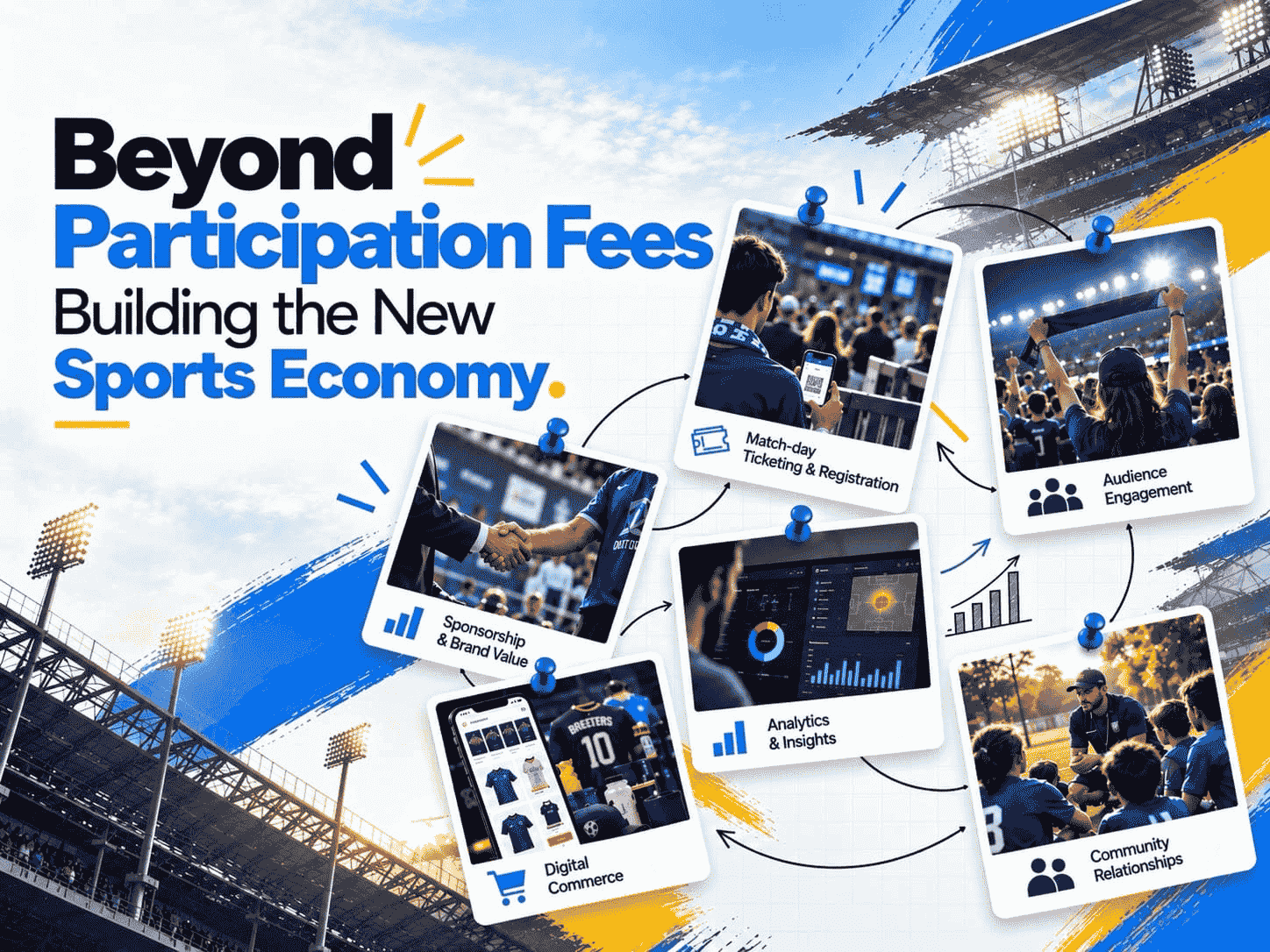
Velocity, Plarena's operational and commercial layer, supports this foundation. Alongside league operations, competition administration and registrations, it creates opportunities around ticketing, subscriber relationships, merchandise and referral management.
Each of these touchpoints plays a role in fan engagement:
Ticketing makes attending easier and can help organisations understand who comes to their events.
Subscriber relationships give supporters a more lasting connection than a one-off visit.
Merchandise gives people a visible way to show belonging.
Referral management recognises that supporters often bring new people into the community.
Understanding the Community Better
When these relationships are managed thoughtfully, organisations gain a clearer picture of their community. They can see which events attract people, which experiences bring supporters back and where engagement could grow. That understanding helps them serve their supporters better, not simply sell to them.
The Engagement Calendar: Before, During and After Match Day
Strong sporting communities are not built on match day alone. They are built across the whole week and the whole season. A connected approach turns each stage of the sporting calendar into a chance to strengthen the relationship.
Before the Match
Anticipation is part of the experience. Fixtures, team announcements, athlete updates and ticket availability give supporters reasons to engage before a ball is kicked. Athletes can share how they are preparing, and clubs can invite families and local partners to be part of the day.
During the Match
For those at the ground, the atmosphere is the reward. For those who cannot be there, a live broadcast lets them share the moment in real time. Families in different cities, supporters abroad and talent scouts can all experience the same match.
After the Match
This is where most of the value has traditionally been lost. Replays and highlights keep the best moments alive. Athletes can reflect on the game with their community. Coaches and players can share lessons with aspiring athletes. The conversation continues instead of stopping at the final whistle.
Between Seasons
The off-season is often the quietest period for supporters, but it can be one of the most valuable for community building. Clinics, coaching experiences, community events, merchandise and social causes give people reasons to stay connected until competition returns.
"The strongest sporting communities are not built in ninety minutes. They are built in the time between matches."
Key PerspectiveEngagement That Respects People
Trust Comes Before Attention
Fan engagement can easily become a race for attention: more notifications, more posts, more pressure to keep people scrolling. That approach may produce short-term activity, but it rarely builds lasting communities.
Sport has something more valuable to offer: genuine belonging. Protecting that means treating supporters as people, not metrics.
Principles for Responsible Community Building
Consent: people choose how they participate and what they share.
Care for young athletes: content involving minors is handled with particular care and appropriate permissions from families.
Safe spaces: communities are moderated so that athletes and supporters feel respected.
Transparency: supporters understand how their information is used.
Appropriate access: personal information is only available to the people who genuinely need it.
Meaningful value: engagement should give people something worthwhile, not simply take their time.
When these principles are in place, communities grow on trust. And trust is what turns a supporter into a long-term member of the sporting community.
A Practical Path to Stronger Sporting Communities
Building a stronger fan relationship does not require doing everything at once. Organisations that make real progress usually build it step by step, starting with visibility and growing towards lasting community.
Step 1: Make Every Match Visible
Broadcasting matches gives families, distant supporters and scouts a way to follow the game, even when they cannot attend. Visibility is the foundation every other form of engagement builds on.
Step 2: Keep the Best Moments Alive
Replays, highlights and clips allow the most memorable moments to travel long after the final whistle, keeping supporters engaged throughout the week.
Step 3: Give Athletes a Community Space
Athletes and coaches connect with supporters through content, clinics and coaching experiences in a dedicated space, where relationships can grow over time rather than disappear in a feed.
Step 4: Connect the Supporter Journey
Ticketing, subscriber relationships and merchandise work best as one connected experience, turning occasional visitors into long-term members of the community.
Step 5: Build on Trust
Clear consent, careful handling of young athletes' information and well-moderated community spaces make supporters feel safe and respected. Trust is what keeps a community together.
Each step strengthens the next. Together, they turn an audience that watches into a community that belongs.
Conclusion: From Watching Sport to Belonging to It
The future of fan engagement is not about louder marketing or more posts. It is about building relationships that continue beyond the match, across the season and throughout an athlete's journey.
When matches become visible, athletes can build communities, clubs can nurture lasting relationships and supporters can participate rather than simply watch, sport becomes something people belong to.
That is the shift from spectators to sporting communities.
Build Communities That Outlast the Final Whistle
Discover how Plarena connects broadcasting, athlete communities and sporting operations into one connected ecosystem.
Plarena Editorial
VerifiedPublished by the Plarena Research and Technology team. Providing deep strategic perspectives on sports commercialization, athlete empowerment, and digital infrastructure.
Power Your Organization With Plarena
Join leagues, clubs, and sports stars driving the next generation of sports technology, automated broadcasting, and athlete commerce.